
Most logistics teams don’t have a data problem; they have a decision problem.
Your Odoo ERP system already tracks everything, orders, inventory, suppliers, and deliveries. It provides a strong operational foundation. But when delays happen or stock runs low, decisions often still depend on manual reports or delayed insights.
This is where Odoo AI for logistics becomes a real advantage.
In short: Odoo AI for logistics helps you turn your Odoo data into faster, more accurate, and more actionable decisions across inventory, delivery, and supply chain operations.
What is Odoo AI for Logistics?
Odoo AI for logistics refers to enhancing your Odoo ERP system with intelligent data processing capabilities that:
- Analyze historical and real-time Odoo data
- Identify patterns and operational risks
- Recommend next-best actions
- Support faster and more consistent decision-making
Instead of just viewing reports, your team can act on insights instantly.
Why Odoo Data Alone Isn’t Enough for Logistics Decision-Making
Odoo already centralizes logistics data across inventory, sales, procurement, and delivery. The next step is using that data more effectively.
Common challenges businesses face:
- Inventory data is available, but replenishment decisions can be delayed
- Sales trends are visible, but forecasting can be more precise
- Delivery data is tracked, but efficiency improvements are not always obvious
The shift is clear: from static reporting to decision-ready insights using ERP data analytics for logistics.
How Odoo AI Helps in Supply Chain Decision Making
Key decisions improved by Odoo AI for logistics:
- Demand forecasting
- Inventory planning
- Route optimization
- Supplier selection
- Risk identification
This is one of the most effective ways to use Odoo for logistics optimization in real business scenarios.
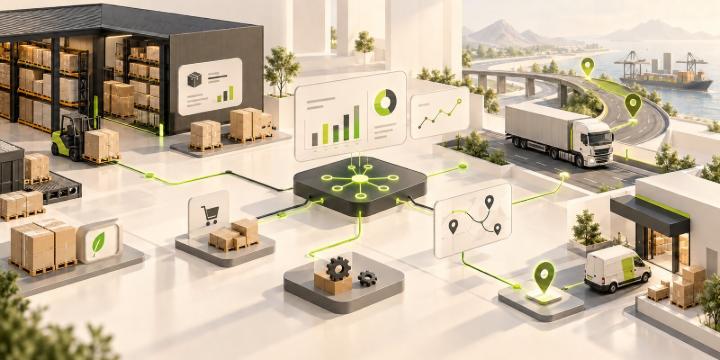
How Odoo AI for Logistics Improves Real Decisions
1. Demand Forecasting That Adapts to Change
Forecasting becomes more reliable when it reflects real-world conditions using Odoo data.
- Combines historical data with current trends
- Improves prediction accuracy
- Reduces overstocking and stockouts
This strengthens demand forecasting using ERP for logistics planning.
2. Inventory Planning with Greater Clarity
Better decisions start with better visibility.
- Align stock levels with actual demand
- Identify fast- and slow-moving items
- Improve replenishment timing
This is where inventory optimization using AI directly impacts cost and efficiency.
3. Delivery Planning That Improves Efficiency
Delivery performance improves when planning becomes dynamic.
- Optimize routes based on real-time conditions
- Identify delays early
- Improve delivery timelines
This reflects the real value of route optimization software AI in logistics.
4. Faster Answers for Operational Questions
Teams often need quick clarity:
- Which shipments need attention today?
- Where are delays happening?
- What should we prioritize next?
With real-time logistics analytics, these answers become instantly accessible, without digging through multiple reports.
5. More Consistent Decisions Across Odoo Workflows
From procurement to warehouse management:
- Improve supplier selection
- Optimize resource allocation
- Reduce inconsistent decision-making
This is where automated decision-making ERP supports day-to-day operations.
Real-World Impact: What Businesses Actually Gain
Most logistics inefficiencies are not operational, they’re decision related.
Better Inventory Control
Maintain optimal stock levels while improving availability and reducing excess inventory.
Lower Logistics Costs
Smarter planning leads to reduced fuel costs, fewer delays, and improved efficiency.
Stronger Planning Confidence
Teams move faster with fewer uncertainties and better clarity.
A Simple Framework: Logistics Decision Maturity
To understand where your business stands:
Level 1: Reactive
- Decisions based on reports
- Delays in response
Level 2: Insight-Driven
- Data is analyzed regularly
- Decisions improve but require effort
Level 3: Predictive
- Insights are generated automatically
- Decisions are faster and more proactive
Odoo AI for logistics helps businesses move toward Level 3.
How to Use Odoo for Logistics Optimization
Step 1: Identify Decision Bottlenecks
Focus on areas where:
- Delays occur
- Errors repeat
- Manual effort is high
Step 2: Make Your Odoo Data More Actionable
Ensure your Odoo data is:
- Connected across modules
- Easy to interpret
- Available in context
Step 3: Start with High-Impact Use Cases
Begin with:
- Demand forecasting
- Inventory recommendations
- Operational alerts
Step 4: Build Around Existing Odoo Workflows
Enhance your current processes instead of replacing them. This is where a well-planned AI integration in Odoo can naturally support your workflows and improve how decisions are made across logistics operations.
Key Benefits of AI in Odoo ERP for Logistics
- More accurate planning
- Faster decision-making
- Reduced operational costs
- Improved delivery performance
- Better utilization of Odoo data
These are key benefits of AI in Odoo ERP for logistics that directly impact business outcomes.
When Should You Consider This Approach?
You’ll see strong value if:
- Your team spends too much time analyzing reports
- Decisions are slower than needed
- Forecasting accuracy needs improvement
- You want to unlock more value from your Odoo ERP system
This is the right time to improve logistics efficiency using your Odoo data.
How BizzAppDev Helps You Build Smarter Odoo Systems
At BizzAppDev, we focus on helping businesses get more value from their Odoo ERP systems through advanced AI capabilities.
We support:
- Smarter logistics workflows
- Better data-driven decision systems
- Scalable ERP environments aligned with business growth
Explore more about our approach to Odoo implementation services and how we enhance ERP systems for real business impact.
We also help businesses adopt intelligent systems through our expertise in AI solutions for supply chain, ensuring your logistics operations are future-ready.
Conclusion: Make Better Decisions with Odoo AI for Logistics
Your Odoo ERP system already holds valuable insights. The real advantage lies in how effectively you use them.
With Odoo AI for logistics, businesses can:
- Turn connected Odoo data into clear, actionable insights
- Reduce reliance on manual analysis
- Make faster, more confident decisions
In today’s logistics environment, speed and clarity define success.
And with the right approach, your Odoo system becomes more than a tool, it becomes a true decision-making advantage.
Want to turn your Odoo data into faster, smarter logistics decisions?
Talk to our experts and see how you can unlock real value from your ERP.
FAQs
Odoo AI for logistics helps by analyzing your existing Odoo data to identify patterns, predict outcomes, and suggest actions. This enables faster and more accurate decisions across inventory, delivery, and supply chain operations.
Odoo AI can improve key processes such as demand forecasting, inventory planning, route optimization, and supplier selection. It helps businesses operate more efficiently by turning data into actionable insights.
Yes, by improving forecasting accuracy, optimizing delivery routes, and reducing inefficiencies, Odoo AI helps lower operational costs and improves overall logistics performance.
Start by identifying areas where decisions are slow or inconsistent, such as inventory or delivery planning. Then focus on making your Odoo data more actionable and applying AI capabilities to those high-impact areas.
Yes, businesses already using Odoo ERP can benefit the most, as their existing data can be used to generate insights, improve decision-making, and enhance overall logistics efficiency.